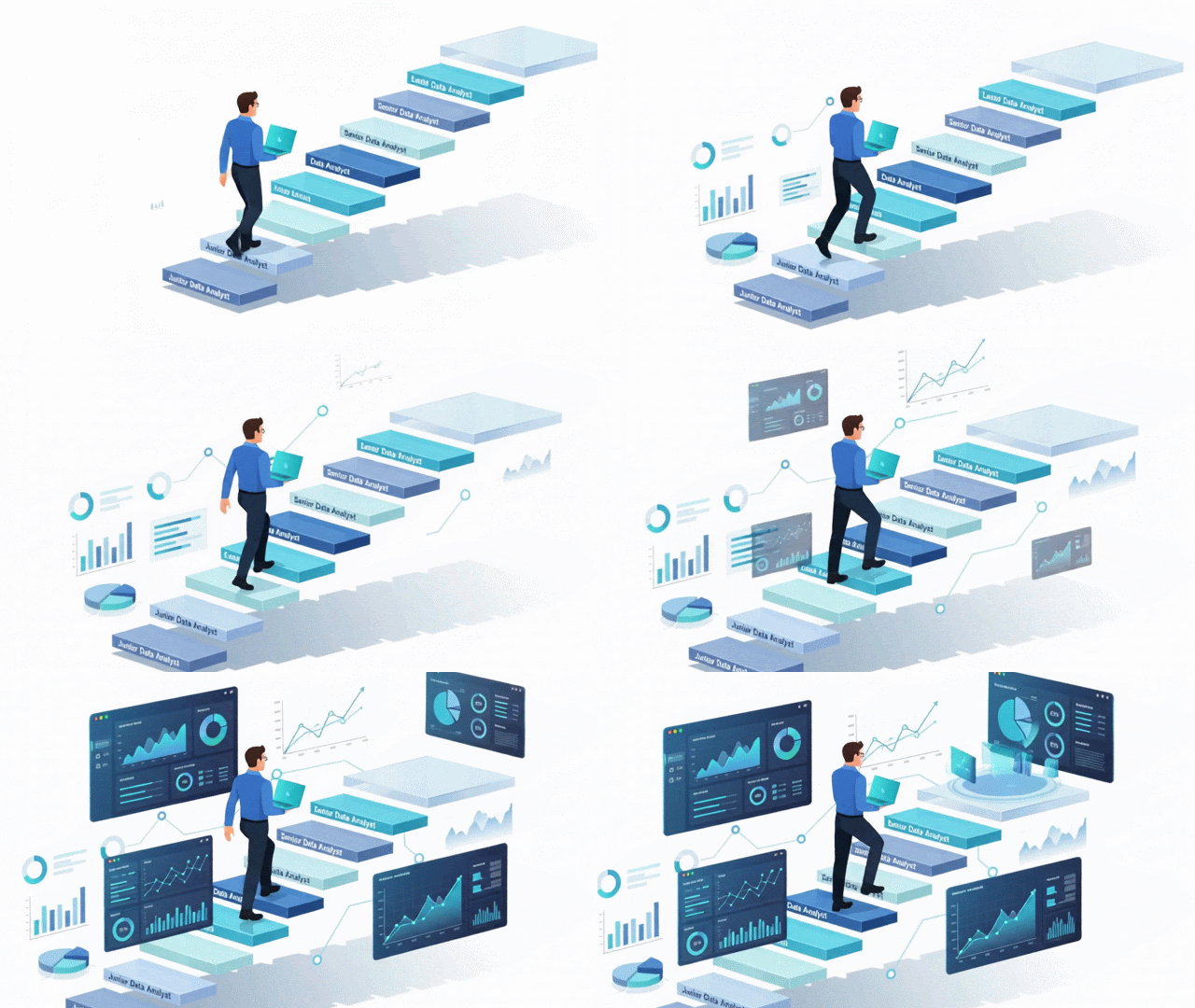
Every Data Analyst starts with the same goal—to build a successful career. However, not everyone follows the same path. Some professionals remain in the same role for years, while others steadily progress into senior and leadership positions.
The difference isn't simply the number of years they've worked. Career growth comes from taking on greater responsibility, making better business decisions, communicating effectively, and creating measurable impact.
This guide explains how a Data Analyst's career typically progresses from a Junior Analyst to senior leadership roles, what each position involves, and how responsibilities evolve over time.
Although job titles vary between organizations, the career path usually looks like this:
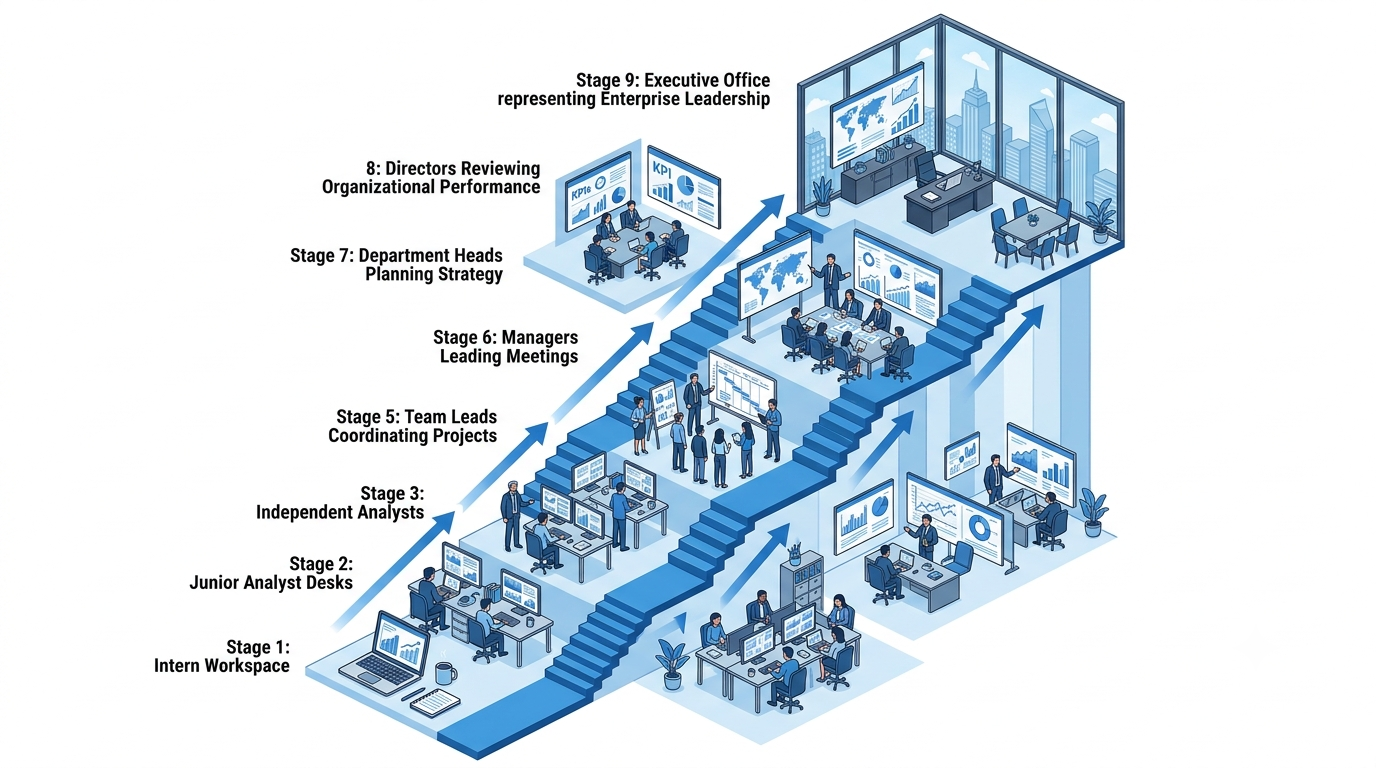
As you move up the ladder, your focus gradually shifts:

An internship is often the first opportunity to experience how analytics works in a real business environment. It provides hands-on exposure to real datasets, reporting processes, and collaboration with experienced analysts.
Learning how analytics teams operate.

A Junior Data Analyst focuses on building strong analytical foundations while supporting senior team members. At this stage, the emphasis is on learning, accuracy, and consistency.
Learning and execution.
A successful Junior Analyst:
At this level, you're expected to execute tasks reliably rather than make major business decisions.

The transition from Junior Data Analyst to Data Analyst marks an important milestone. Instead of simply completing assigned work, you're expected to own analytical projects from start to finish.
Independent problem solving.
A successful Data Analyst:
The biggest change at this stage is ownership. Managers begin trusting you to deliver results without constant guidance.

Senior Data Analysts do much more than analyze data. They influence decisions, guide teammates, and help shape the organization's analytical direction.
Creating business impact.
A successful Senior Data Analyst:
At this stage, people value your judgment as much as your technical ability.
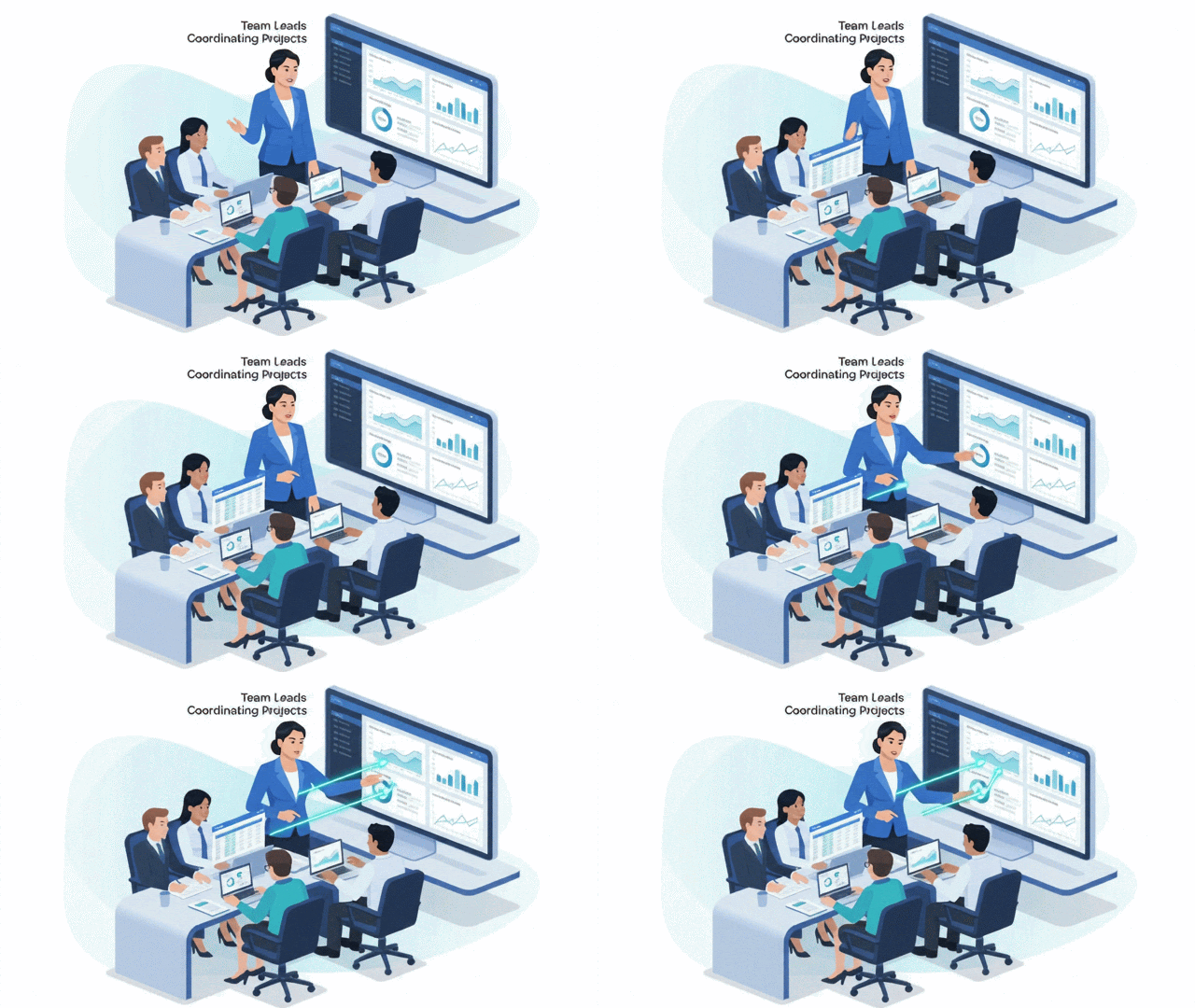
Lead Data Analysts bridge the gap between technical teams and management. While they still work with data, a significant part of their role involves guiding the team's direction.
Technical leadership.
A successful Lead Analyst:
Leadership at this stage comes through influence rather than authority.

The Analytics Manager shifts focus from individual contributions to team performance. Their success depends on enabling others to succeed.
People management.
A successful Analytics Manager:

The Head of Analytics oversees the organization's analytics function and ensures data supports long-term business objectives.
Department strategy.
Success at this level is measured by the performance and strategic value of the entire analytics department.
The Director of Analytics oversees multiple analytics teams and ensures that analytical initiatives contribute directly to business growth.
Organizational leadership.
Directors focus less on performing analysis and more on ensuring analytics delivers measurable business value.
The Vice President of Analytics works closely with executive leadership to shape company-wide decisions using data.
Executive leadership.
The Chief Data Officer is responsible for the organization's overall data strategy. This executive role ensures that data becomes a strategic asset across every department.
Enterprise data vision.
| Career Stage | Primary Focus |
|---|---|
| Intern | Learning |
| Junior Data Analyst | Execution |
| Data Analyst | Ownership |
| Senior Data Analyst | Business Impact |
| Lead Data Analyst | Technical Leadership |
| Analytics Manager | People Leadership |
| Head of Analytics | Department Strategy |
| Director / VP | Organizational Leadership |
| Chief Data Officer | Enterprise Vision |
One pattern becomes clear: every promotion brings greater responsibility. Technical expertise remains important, but communication, business understanding, leadership, and strategic thinking become increasingly valuable as your career progresses.
A successful Data Analytics career is a journey of continuous growth. As you move from Junior Data Analyst to senior leadership roles, your responsibilities evolve from completing tasks to influencing decisions, guiding teams, and shaping business strategy.
Understanding this progression helps you prepare for the next step in your career. Rather than focusing only on your current role, think about the expectations of the role you want next. Developing the mindset, responsibility, and business impact required at each stage will put you in the strongest position for long-term success.
